What Makes These GCCs Significant?
India’s Global Capability Center (GCC) ecosystem has evolved significantly beyond traditional support and back-office operations. Today, GCCs are becoming strategic centers for technology, engineering, artificial intelligence, product development, research, cybersecurity, cloud and global innovation.
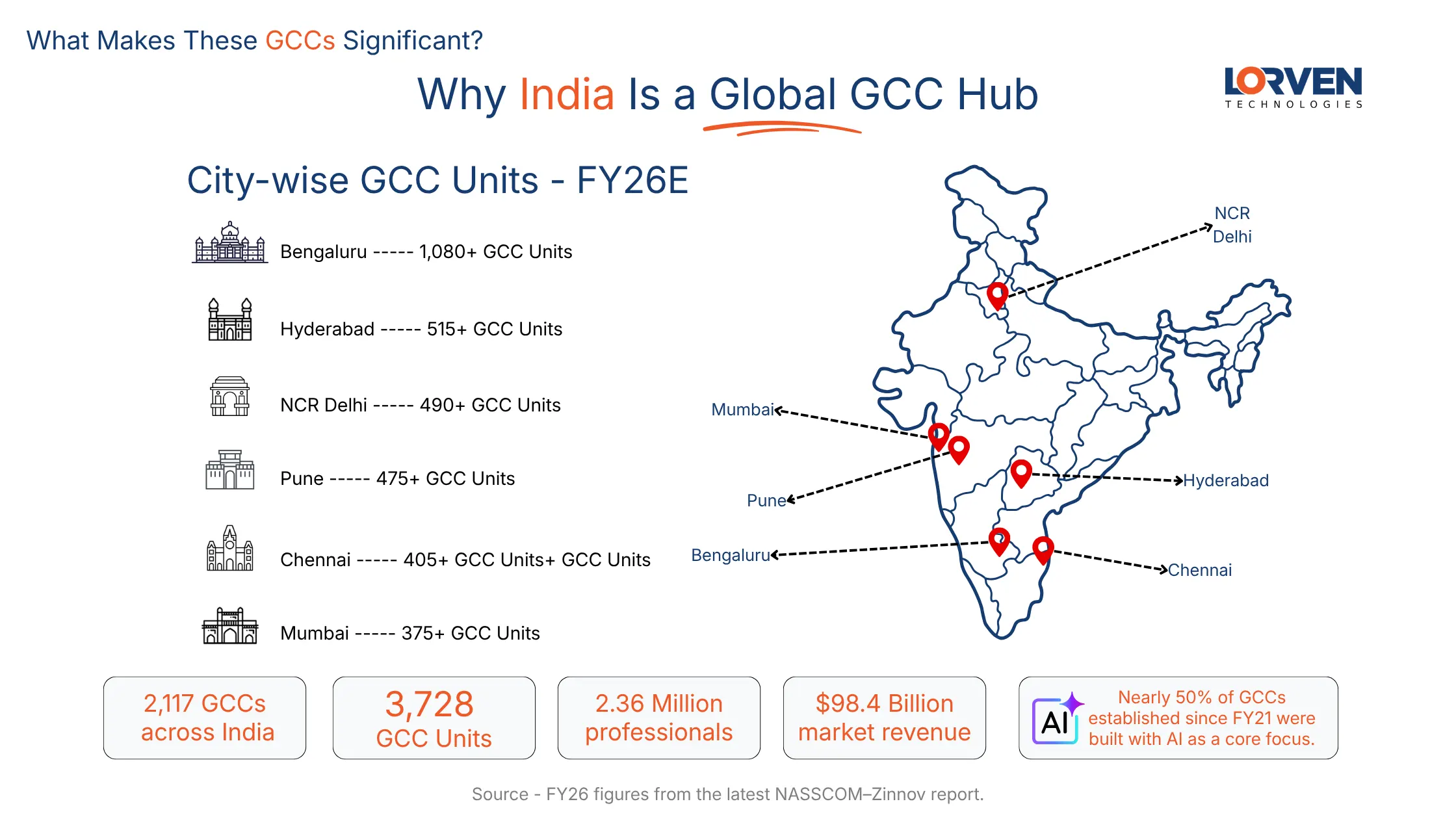
The scale of this transformation is significant. According to the latest NASSCOM–Zinnov GCC Landscape 2026 report, India has 2,117 GCCs operating across 3,728 units and employing around 2.36 million professionals as of FY26. The ecosystem has also reached approximately $98.4 billion in market revenue, with 506 Forbes Global 2000 companies operating in India.
The significance of a GCC is no longer determined only by employee count. Leading centers increasingly contribute to product engineering, AI, cloud, cybersecurity, data analytics, research and development, and global technology strategy.
The latest NASSCOM–Zinnov report highlights this shift, with Indian GCCs increasingly moving from delivery-focused operations toward enterprise-level value creation. Nearly half of the GCCs established since FY21 were built with AI at their core, while more than 1,200 GCCs have embedded AI and machine learning capabilities.
This means the next phase of India’s GCC growth is increasingly about specialized capabilities, innovation and business impact, rather than simply increasing headcount.
Top GCC Companies in India – Technology & Product GCCs
India’s GCC and technology landscape is concentrated across major hubs including Bengaluru, Hyderabad, Pune, Chennai, Mumbai and Delhi NCR. Each location has developed strengths across technology, engineering, financial services, manufacturing, automotive, and other industries.
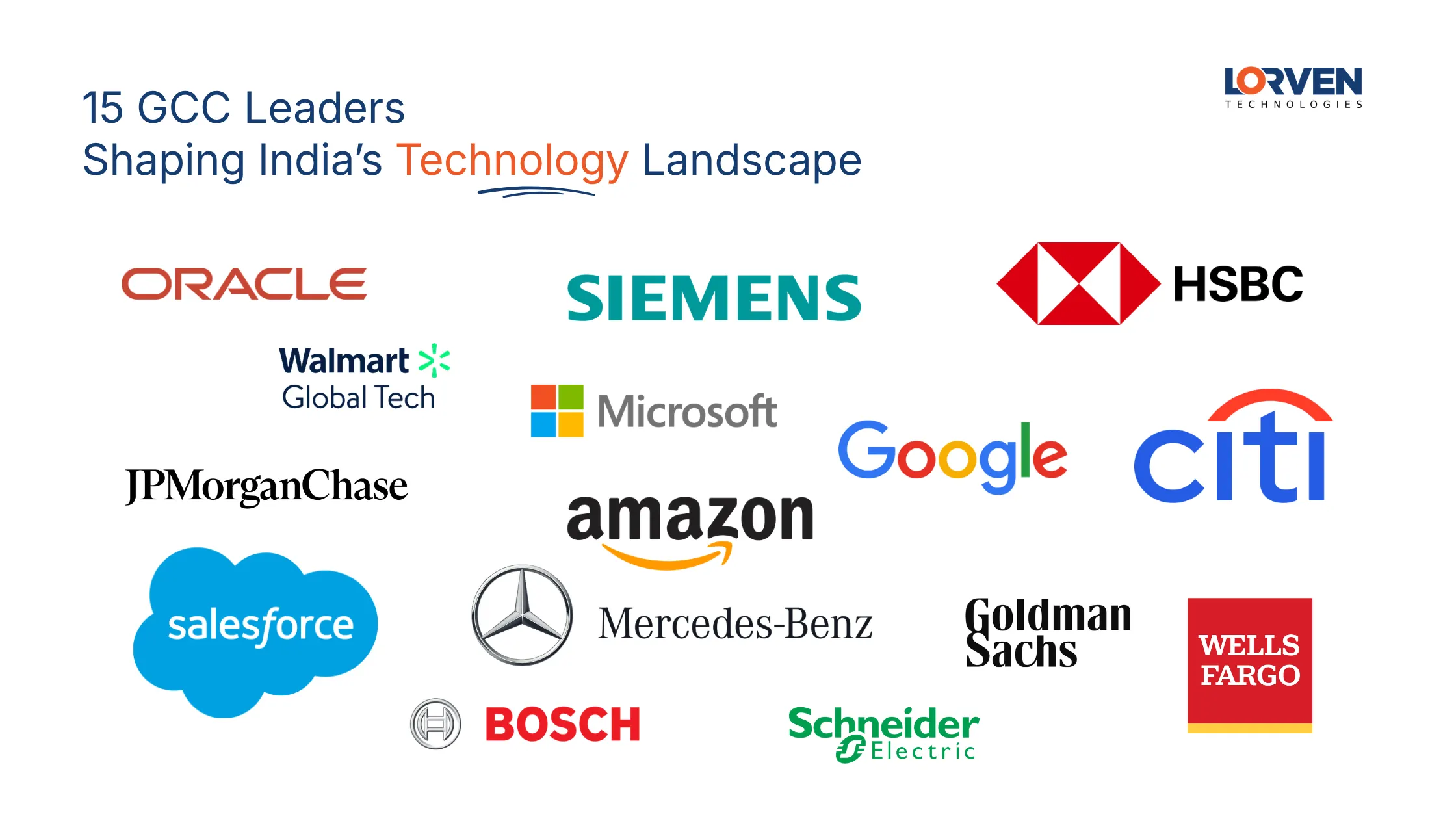
Technology & Product GCCs
Microsoft – Hyderabad, Bengaluru, Pune, Chennai & Mumbai
Microsoft has a significant technology presence across India, with operations spanning research and development, engineering, cloud, AI and customer technology. Its India footprint covers multiple major cities, while Bengaluru is home to Microsoft India Development Center engineering teams.
Amazon – Bengaluru, Hyderabad, Chennai & Pune
Amazon has built major technology and engineering capabilities in India, supporting software development, cloud technologies, e-commerce platforms, data and global digital products.
Google – Bengaluru, Hyderabad & Pune
Google’s India technology operations contribute to engineering, product development, cloud and AI capabilities, with Bengaluru and Hyderabad serving as important technology locations.
Salesforce – Bengaluru, Hyderabad & Mumbai
Salesforce has established significant technology capabilities in India focused on cloud computing, software engineering, product development and enterprise technology.
Oracle – Bengaluru, Hyderabad & Pune
Oracle’s India development and global operations support cloud infrastructure, enterprise software, financial technology and product engineering. Oracle’s official India locations include major development and operations centers in Bengaluru, Hyderabad and Pune, among other cities.
Walmart Global Tech – Bengaluru, Chennai & Gurugram
Walmart Global Tech’s India teams develop technology and product solutions supporting Walmart’s global retail operations. Its Indian operations include Bengaluru, Chennai and Gurugram, with capabilities spanning software engineering, data, product development and cybersecurity.
Banking & Financial Services GCCs
Financial institutions have also established large technology and business operations in India. These centers increasingly support digital banking, cybersecurity, data analytics, financial platforms, and enterprise technology.
JPMorgan Chase – Bengaluru, Hyderabad & Mumbai
JPMorgan Chase has a substantial technology and operations presence in India, supporting banking platforms, software engineering, cybersecurity, data, analytics and financial technology.
Goldman Sachs – Bengaluru, Hyderabad & Mumbai
Its India teams contribute to technology development, analytics and business operations that support Goldman Sachs’ global financial services ecosystem. Its Bengaluru and Hyderabad offices are major technology hubs and collectively represent one of the firm’s largest global presences.
HSBC – Hyderabad, Pune, Bengaluru & Chennai
HSBC’s Indian operations support technology, digital banking, cybersecurity, analytics and global business functions, making India an important part of its global technology ecosystem.
Citi – Mumbai, Pune, Bengaluru & Chennai
Citi has significant capabilities across technology, financial platforms, analytics and global operations, with India playing an important role in supporting its global financial services business.
Wells Fargo – Bengaluru, Hyderabad & Chennai
Wells Fargo’s Indian technology operations support software engineering, analytics, financial technology and global banking operations.
Engineering & Industrial GCCs
India is also a major destination for engineering, automotive and industrial technology operations. These centers increasingly combine engineering expertise with software, connected technologies, automation, and digital transformation.
Bosch – Bengaluru, Pune & Chennai
Bosch’s presence in India spans automotive engineering, software, connected technologies and research-focused development.
Siemens – Bengaluru, Pune & Chennai
Siemens’ technology and engineering operations support industrial software, automation, digital industries, and engineering capabilities.
Mercedes-Benz – Bengaluru & Pune
Mercedes-Benz has engineering and technology capabilities supporting automotive software, digital platforms, R&D, and connected mobility.
Schneider Electric – Bengaluru, Hyderabad & Chennai
Schneider Electric’s technology operations support digital engineering, energy management, automation and industrial technology.
Conclusion
India’s GCC ecosystem is continuing to mature from traditional delivery centers into strategic technology and innovation hubs. Companies across technology, financial services, manufacturing, automotive and other industries are increasingly using their India operations for engineering, AI, cloud, cybersecurity, data and product development.
As GCCs become more technology-intensive, the need for the right technology ecosystem and specialized partners will also grow. Organizations looking to build, scale, or modernize their GCC capabilities can benefit from expertise across software development, AI, cloud engineering, cybersecurity, data and digital transformation.
Lorven Technologies can support GCCs with software development, AI, cloud engineering, cybersecurity, data and digital transformation capabilities.