Cloud technology has become the backbone of modern digital transformation, enabling businesses to innovate faster, scale seamlessly, and operate more efficiently. From startups to global enterprises, organizations are adopting cloud computing to modernize IT infrastructure, support AI-driven applications, and enhance business resilience. Industry forecasts highlight this momentum, with global cloud spending expected to reach $680 billion in 2026, growing by 21% year over year, while India’s public cloud spending is projected to increase 28.1% to $17.5 billion, driven by demand for AI-ready infrastructure and application modernization.
What is Cloud Technology?
Cloud technology is the delivery of computing services including servers, storage, databases, networking, software, analytics, and artificial intelligence over the internet instead of relying on-premises infrastructure. By accessing these resources on demand, businesses can scale operations, improve performance, and reduce the cost of purchasing and maintaining physical hardware.
Unlike traditional IT environments, where organizations invest heavily in data centers and hardware, cloud technology follows a pay-as-you-go model. This allows businesses to provision computing resources within minutes, respond quickly to changing demands, and pay only for the services they use. As a result, cloud computing has become a key enabler of digital transformation across industries.
At its core, cloud technology is built on three essential characteristics:
- On-Demand Access: Provision computing resources whenever needed without manual infrastructure setup.
- Scalability and Flexibility: Increase or decrease resources based on business requirements, ensuring optimal performance during peak and low-demand periods.
- Shared Infrastructure: Cloud providers manage and maintain the underlying infrastructure, allowing organizations to focus on innovation instead of IT maintenance.
Cloud Technology vs. Traditional IT Infrastructure
Traditional IT infrastructure requires organizations to purchase, install, and maintain physical servers, storage devices, and networking equipment within their own facilities. While this approach provides complete control, it also involves high upfront costs, ongoing maintenance, limited scalability, and longer deployment times.
Cloud technology, in contrast, offers a modern, internet-based infrastructure that is highly scalable, cost-efficient, and managed by cloud service providers. Organizations can deploy applications globally, improve collaboration, and accelerate innovation without investing in expensive hardware or dedicated data centers.
As businesses continue to embrace AI, automation, and data-driven decision-making, cloud technology has evolved from a cost-saving solution into a strategic platform that drives innovation, operational efficiency, and long-term business growth.
Transition: To understand how cloud technology became the backbone of modern enterprises, let’s explore its history and evolution over the years.
History and Evolution of Cloud Computing
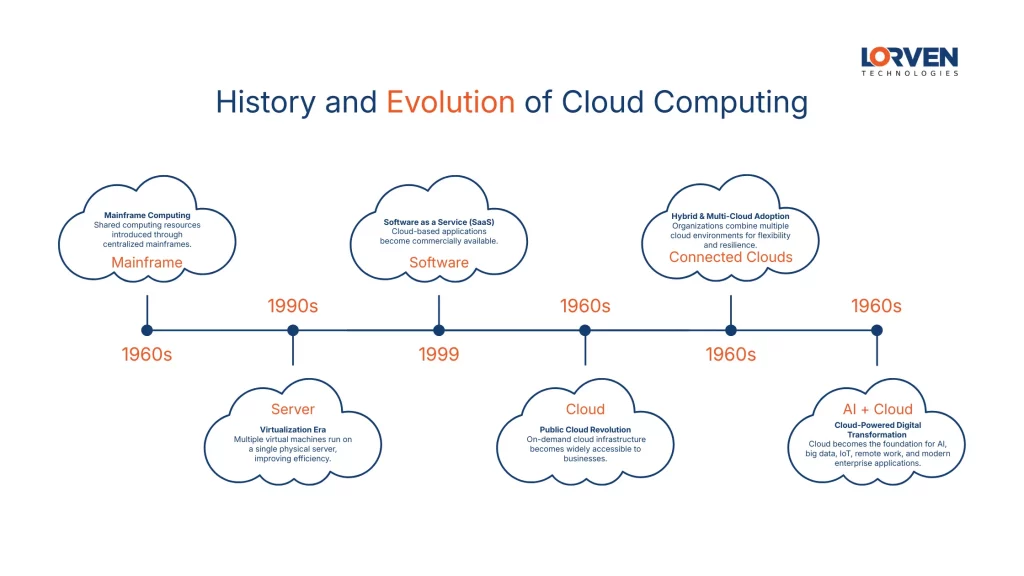
Cloud computing has evolved from a niche concept into the backbone of modern digital infrastructure. In the 1960s, researchers introduced the idea of shared computing resources through mainframe systems. The rise of virtualization in the late 1990s made it possible to run multiple virtual machines on a single server, improving efficiency and resource utilization. The launch of public cloud platforms in the 2000s transformed how businesses accessed computing power, making scalable IT infrastructure available on demand. Today, cloud technology supports artificial intelligence (AI), big data analytics, the Internet of Things (IoT), and enterprise applications, enabling organizations to innovate faster, reduce operational complexity, and accelerate digital transformation across industries.
How Cloud Technology Works
Cloud technology works by delivering computing resources over the internet through a network of secure data centers managed by cloud service providers. Instead of relying on local servers, businesses access virtualized resources such as computing power, storage, databases, and applications whenever needed. Virtualization enables multiple users to share the same physical infrastructure securely while maintaining data isolation and performance. Cloud platforms automatically allocate resources based on demand, ensuring high availability, scalability, and efficient performance.
Behind the scenes, advanced security measures, continuous monitoring, and backup systems help protect data and maintain business continuity. This architecture allows organizations to deploy applications faster, reduce infrastructure management, and focus on innovation rather than maintaining hardware.
Types of Cloud Deployment Models
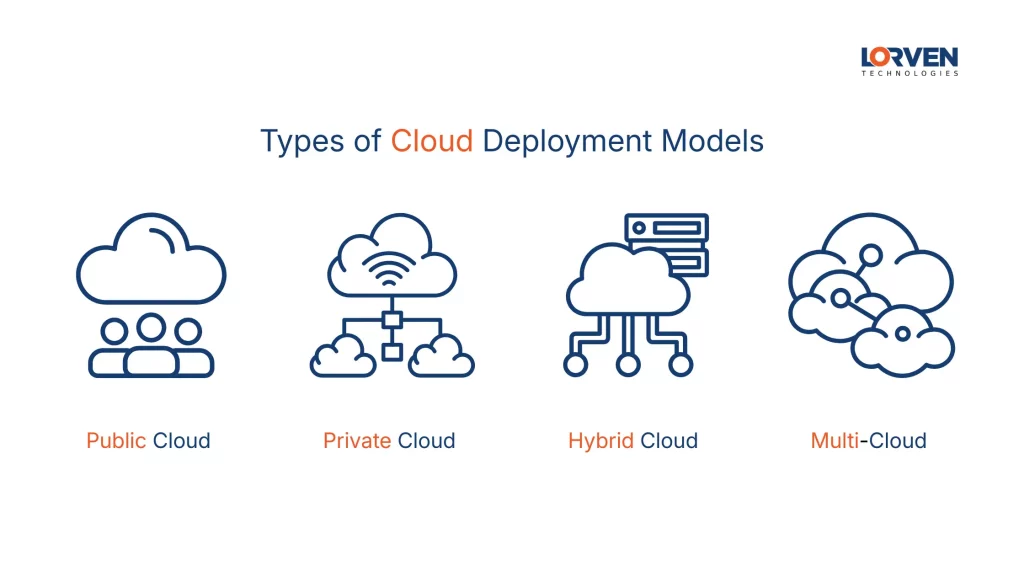
Cloud deployment models define how cloud infrastructure is designed, managed, and delivered to meet different business requirements. Choosing the right deployment model depends on factors such as security, regulatory compliance, scalability, workload demands, and budget. Organizations may adopt a single model or combine multiple approaches to create a flexible and resilient IT environment.
Public Cloud
A public cloud is a shared computing environment where infrastructure is maintained by an external service provider. Organizations can access computing resources such as servers, storage, and applications through an internet connection, eliminating the need to manage physical infrastructure internally. It offers high scalability, cost efficiency, and rapid deployment, making it ideal for startups, small businesses, and enterprises with dynamic workloads.
Private Cloud
A private cloud provides dedicated infrastructure for a single organization, offering greater control, customization, and security. It is commonly used by businesses in highly regulated industries such as healthcare, banking, and government, where data privacy and compliance are critical.
Hybrid Cloud
A hybrid cloud combines public and private cloud environments, enabling organizations to keep sensitive workloads on private infrastructure while leveraging the public cloud for scalability and flexibility. This approach helps businesses balance security, performance, and cost.
Multi-Cloud
A multi-cloud strategy involves using services from multiple cloud providers, such as AWS, Microsoft Azure, and Google Cloud. This approach reduces vendor dependency, improves resilience, and allows organizations to choose the best platform for specific workloads and business objectives.
Types of Cloud Services
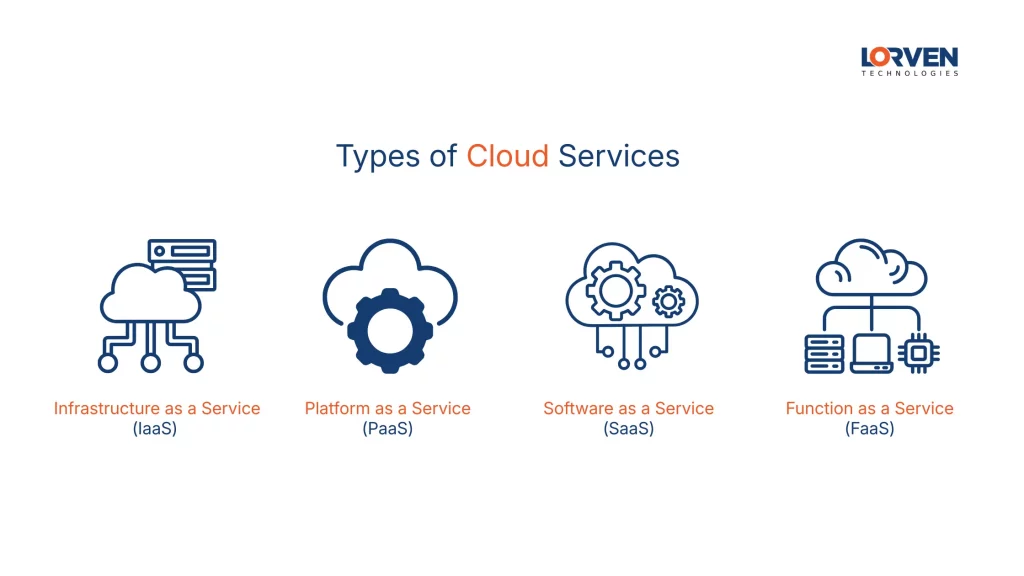
Infrastructure as a Service (IaaS)
Infrastructure as a Service (IaaS) provides on-demand access to essential computing resources such as virtual servers, storage, networking, and operating systems. Businesses can scale infrastructure based on demand without investing in physical hardware, making it ideal for application hosting, disaster recovery, and development environments.
Platform as a Service (PaaS)
Platform as a Service (PaaS) provides developers with a managed cloud environment that includes the tools and services required to build, test, deploy, and maintain applications without managing the underlying infrastructure. It includes development tools, databases, middleware, and runtime environments, allowing developers to focus on building software while the cloud provider manages the underlying infrastructure.
Software as a Service (SaaS)
Software as a Service (SaaS) delivers ready-to-use applications over the internet through a subscription model. Users can access software from any device without installation or maintenance, making it a popular choice for collaboration, productivity, customer relationship management (CRM), and enterprise applications.
Function as a Service (FaaS)
Function as a Service (FaaS), also known as serverless computing, enables developers to execute individual functions in response to specific events without managing servers. This model improves scalability, reduces operational overhead, and allows organizations to pay only for the computing resources consumed during execution.
Benefits of Cloud Technology
Cloud technology offers organizations the flexibility, scalability, and resilience needed to compete in today’s fast-changing digital landscape. By moving workloads to the cloud, businesses can reduce operational complexity while improving performance and innovation.
- Lower IT Costs: Eliminate large upfront investments in hardware and pay only for the cloud resources you use.
- Scalability on Demand: Quickly scale computing resources up or down based on business needs without infrastructure limitations.
- Improved Business Agility: Deploy applications and services faster, enabling quicker responses to market changes and customer demands.
- Enhanced Security: Leading cloud providers offer advanced security features, including encryption, identity management, continuous monitoring, and compliance support.
- High Availability and Business Resilience: Modern cloud environments are designed to keep applications running even during unexpected disruptions. Features such as distributed infrastructure, automated data replication, and recovery mechanisms help organizations maintain uninterrupted operations.
- Remote Accessibility: Employees can securely access applications and data from anywhere, supporting hybrid and remote work environments.
- Business Continuity: Automated backup and recovery solutions help organizations maintain operations during unexpected disruptions.
- Faster Innovation: Cloud technology accelerates the adoption of emerging technologies such as artificial intelligence, machine learning, analytics, and IoT, helping businesses drive continuous digital transformation and long-term growth.
Lorven Technologies help businesses modernize their IT infrastructure with secure, scalable, and future-ready cloud solutions. Our expertise spans cloud consulting, migration, cloud-native application development, managed cloud services, DevOps, and cloud security across leading platforms like AWS, Microsoft Azure, and Google Cloud. Whether you’re beginning your cloud journey or optimizing an existing environment, we deliver tailored cloud strategies that accelerate innovation, improve operational efficiency, and support long-term business growth.
Conclusion
Cloud technology has become a critical driver of business innovation, operational efficiency, and digital transformation. A clear understanding of cloud deployment options, service models, and business advantages helps organizations choose solutions that align with their operational goals, improve efficiency, and prepare for future growth. As cloud adoption continues to accelerate, investing in the right cloud strategy will help businesses remain agile, competitive, and ready for the future.